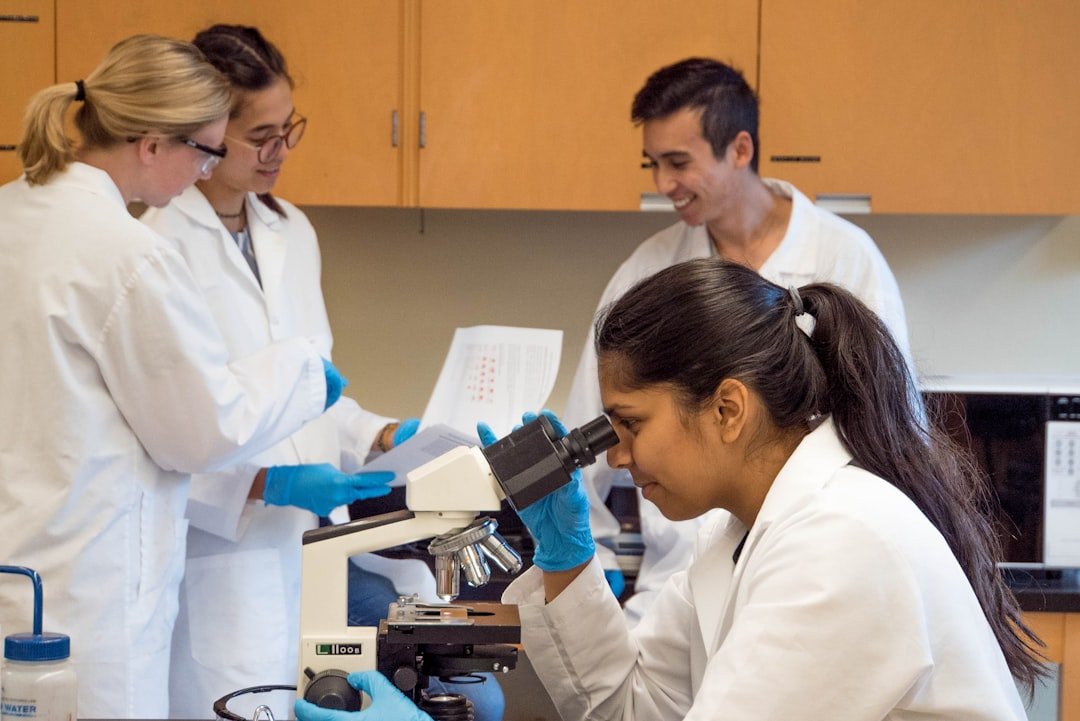
A team of University of Idaho professors and graduate students traveled to the World Ag Expo in Tulare, California, in late April to gauge farmer interest in agricultural technologies they have developed and patented.
The researchers attended the exposition not to promote their inventions, but to conduct what is known as customer discovery—conversations with farmers, equipment manufacturers, and agricultural professionals to determine whether their innovations address real-world needs.
Testing Market Potential Without Revealing Products
Matthew Swenson, an associate professor of engineering at the University of Idaho, explained the approach his group took at the event. Rather than displaying prototypes or pitching their inventions, the researchers asked open-ended questions about challenges farmers face in their daily operations.
The goal was to learn whether the problems their technologies solve are widespread enough to justify commercial development. Swenson said the team wanted to understand pain points in the industry without disclosing what solutions they had created.
The World Ag Expo draws more than 100,000 attendees and hosts over 1,200 exhibitors each year, making it the largest annual outdoor agricultural exposition in the country. It provided a broad cross-section of the agricultural community for the University of Idaho team to interview.
National Science Foundation Training Program
The University of Idaho researchers are participants in the National Science Foundation Innovation Corps program, also known as I-Corps. The program trains scientists and engineers in entrepreneurial skills and helps them assess whether their federally funded research can be turned into marketable products.
Archibald Harner, assistant vice president for research at the University of Idaho and director of the NSF I-Corps Hub for the region, said most scientists are trained in laboratory work and discovery, not in business development or market analysis. Without guidance on identifying customers and scaling prototypes, many patented inventions never move beyond the research phase.
Harner said the I-Corps program requires researchers to complete customer discovery work as part of the commercialization process. The expo provided an opportunity to fulfill that requirement while gathering feedback on technologies designed to make farming operations more efficient and cost-effective.
Wireless Sensor Network for Crop Monitoring
One of the technologies under development is a wireless data collection station called SCARECRO, which stands for Sensor Collection and Remote Environment Care Reasoning Operation. The device is designed to be placed in a farm field and equipped with sensors that monitor soil moisture, temperature, humidity, and other growing conditions.
Mary Everett, associate director of the Center for Intelligent Industrial Robotics at the University of Idaho’s Coeur d’Alene campus, leads the team developing SCARECRO. She said farmers and technology providers at the expo discussed how technology is being used in agriculture, what works well, and where the industry is headed.
The insights gathered will be used to refine the wireless sensor network technology her team is building. SCARECRO has already been deployed in a vineyard in Virginia and at an agricultural operation in Sandpoint, Idaho. Everett said her team is focused on making the technology easier to set up and use for farmers interested in precision agriculture.
Davis Onyeoguzoro, a doctoral student in computer science at the Coeur d’Alene campus, assisted with customer discovery for the SCARECRO project. He said he learned that water management is a top concern for farmers, followed by the impact of government regulations on agricultural operations.
Onyeoguzoro said the experience of speaking directly with farmers and industry professionals was valuable. He noted that it is useful to step outside the laboratory and talk to the people who will ultimately use the technology.
What Comes Next
The University of Idaho research teams will analyze the feedback they collected at the World Ag Expo and use it to guide further development of their technologies. The customer discovery process is a required step in the NSF I-Corps program before researchers can move forward with commercialization efforts.
The insights gained from conversations with farmers, equipment manufacturers, and agricultural technology providers will help determine whether the inventions address market needs and have the potential to become viable products. Researchers will continue refining their prototypes based on what they learned about industry pain points and regulatory challenges.
The university’s participation in the I-Corps program reflects a broader effort to translate federally funded research into practical applications that benefit Idaho’s agricultural economy and farming communities across the region.