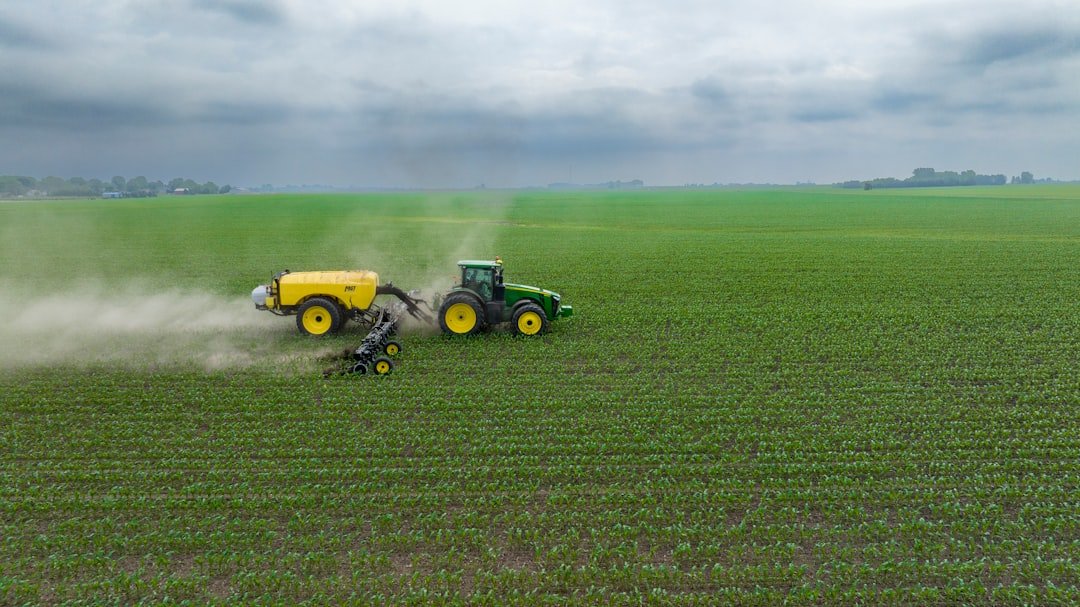
The ongoing U.S. conflict with Iran is hitting Idaho farmers where it hurts most — in their operating budgets — as fertilizer and diesel prices surge at one of the most demanding times of the agricultural calendar. University of Idaho economists are warning that the cost increases could have lasting consequences for producers across the state, including those throughout the Palouse and southern Idaho farming regions.
The disruption stems largely from the closure of the Strait of Hormuz, a critical shipping lane through which a significant portion of the world’s energy and agricultural commodities flow. With Saudi Arabia alone accounting for nearly 20 percent of global phosphate trade, the supply chain disruption is being felt at farm gates across Idaho.
Nitrogen Prices Surge Up to 40 Percent
Xiaoli Etienne, a professor at the University of Idaho, told KMVT that nitrogen fertilizer has taken the sharpest hit of any agricultural input. According to Etienne, farmers have seen increases of as much as 40 percent at the farm gate level — a staggering jump that compounds quickly given how central fertilizer is to crop production economics.
“We have seen as much as 40% increase at the farm gate level for producers. And so for southern Idaho, the number might be a little different, but I suspect it’s very similar magnitude,” Etienne said.
The weight of that number becomes clearer when placed in the context of overall farm operating expenses. Etienne noted that fertilizer typically accounts for more than 30 percent of a farmer’s operating costs. When that input rises by 30 to 40 percent, the combined effect on a farm’s bottom line is severe.
“You think about your operating costs, over 30% is used to purchase fertilizer. And we see 30 to 40% increase in the fertilizer prices. And combined, that’s a very big impact on the farmers,” she said.
The Iran conflict is not the only global force squeezing supply. China halted fertilizer exports in recent months to protect its own domestic planting season, and stopped exporting phosphate as of roughly two months ago. While the United States does not directly import phosphate from China, the reduction in Chinese exports tightens global supply, which drives prices higher across all markets, including the U.S.
Diesel Costs Add Another Layer of Pressure
Beyond fertilizer, Idaho farmers are also facing rising diesel prices — a commodity with no practical substitute during planting and harvest operations. Etienne described the diesel situation as potentially more immediately painful for producers than even the fertilizer price surge.
“For diesel, that’s a different story. This will probably have a more immediate impact for the producers,” Etienne said.
Farmers have some flexibility when it comes to fertilizer — they can adjust application rates, switch crops, or delay purchases in hopes of price relief. Diesel offers no such options. Every tractor run, every irrigation pump cycle, and every delivery truck requires it.
“They will need to reallocate, right? To make up this added cost, the higher expenses for the diesel. And I think, even a very small percentage change in prices, and let alone there’s a dollar or more than a dollar increase in diesel prices. This war, it’s a very tough situation for the farmers this year,” Etienne said.
Approximately 80 percent of Idaho farmers secured their fertilizer supply before the conflict began, which offers some relief in the short term. However, Etienne cautioned that even a ceasefire would not quickly reverse the damage done to fertilizer production and global supply chains.
“Even with a ceasefire, or even if the war stops, the production time for fertilizer has already been lost. And that’s a very long supply chain. The impact will show up, still show up. It’s not going to go away,” she said.
The situation places Idaho’s agricultural community — including Palouse wheat and lentil growers in Latah County — squarely in the crossfire of a global conflict playing out thousands of miles away. Farm families who rely on thin margins are being asked to absorb cost shocks that were not built into this year’s planting budgets.
Despite the bleak economic picture, Etienne expressed confidence in the resilience of Idaho’s farm families. “Farmers are resilient. We have seen over and over again farmers are able to overcome all those shocks they’re putting on them,” she said.
What Comes Next
University of Idaho agricultural economists are expected to continue monitoring price trends as the 2026 growing season progresses. Idaho farmers, commodity groups, and rural lenders will be watching global energy markets and any diplomatic developments in the Middle East closely. For Latah County producers and families across the Palouse, the coming months will test the financial durability of operations already navigating tight margins. Additional coverage of Idaho’s agricultural economy is available at Idaho News and through the Idaho News Network.